




The Heavy Vehicle National Law (HVNL) has many detailed requirements for heavy vehicles such as vehicle standards, mass and dimension limits, and fatigue managements. It also imposes a duty on each party in the “chain of responsibility” (CoR) for a heavy vehicle. This duty, called the “Primary Duty”, applies to businesses that operate and schedule mobile cranes, and to businesses that use mobile cranes to load or unload materials. The CoR is the part of the HVNL that makes parties other than drivers responsible for the safety of heavy vehicles on the road.
A single lapse in planning or communication can have serious consequences, the underlying principle of CoR is the recognition that many different parties influence the safety of a heavy vehicle on a road. which is why CoR spreads the responsibility across the entire supply chain, not just the operator.
Table of Contents
What NHVR Says About CoR
What CoR Means for Crane Businesses
The Primary Duty requires a party in the CoR to ensure, so far as is reasonably practicable, the safety of its transport activities in relation to a heavy vehicle.
That duty doesn’t stop with crane companies who are transport operators. It can extend to:
- Construction companies/contractors that engages the crane hire company under a contract for services.
- Builders and contractors who set site access times and delivery schedules.
- Project managers who make calls that affect how crane parts are loaded and transported on a truck
- Suppliers and others who handle materials being lifted or delivered.
Safety monitoring is not just the responsibility of one party. It is something that all parties should be doing, as a regular part of safety management.
The Code of Practice
The Mobile Crane Industry Code of Practice, which is formally registered under the HVNL, provides practical guidance to help crane businesses meet their CoR obligations. It’s written specifically for the crane sector and complements broader tools like the Master Code and the Load Restraint Guide.

Industry code of practice provides information and guidance about known hazards and risks in industries that work with heavy vehicles and describe control measures that can be used to manage those risks.
The Mater Code of Practice (MCP) and the Mobile Crane Industry Code of Practice (the Crane Code). The MCP is a general code written for the whole of the heavy vehicle industry. Where a topic covered by the Crane Code overlaps with content in the Master Code, you should consider all the guidance that is relevant.
Use the Mobile Crane Industry Code of Practice as your technical “spine” (definitions, roles, crane‑specific hazards and controls), then show in your system how each relevant transport activity and control in the 2026 Master Code is applied in your jobs (e.g. job file templates, lift plans, route surveys, site instructions).
Check that your CoR roles (employer, prime contractor, operator, scheduler) and documents (contracts, induction forms, job dockets, fatigue and maintenance procedures) are aligned with both the crane code and the new Master Code language, so you can demonstrate you are following recognised good practice if audited or investigated.
Hazards that strongly affect crane jobs—such as poor information from clients about loads, ground conditions, or access, and behaviours/culture that pressure drivers and crews—are more clearly called out in the 2026 Master Code, so your procedures and contracts are expected to address these explicitly.
Here’s what that looks like in everyday situations:
Transport Planning
Say you’re moving a 100-tonne all-terrain crane between sites. The scheduler or the allocator chooses the route but overlooks a low bridge or permit requirement. If that crane strikes the bridge or gets stopped for being over-mass, the responsibility doesn’t fall only on the driver, it also rests with the person who planned the move and approved the job.
Time Pressure on Site
A builder (Prime Contractor) demands the crane be on site before dawn to meet a tight project deadline. To make it happen, the crane operator skips a pre-start check or the crane company pushes the crane operator’s work hours. If something goes wrong, both parties could share liability because both influenced how safely the work was done.
Load Restraint
A smaller rough-terrain crane is being transported on a float. The team rushes the job, and the crane isn’t properly secured. If it shifts during transport, responsibility could extend to the loader, the scheduler, and even the client who pressured for a quick turnaround.
Why CoR Matters
Breaching CoR obligations can lead to serious penalties for companies and individuals.. But beyond compliance, CoR is about building a culture of shared safety, when parties work together, they share responsibility for the same matters
It’s about everyone in the chain asking themselves, “Could my decision affect the safe transport of this crane?”
When that question becomes second nature, the benefits flow naturally:
- Fewer incidents and costly delays.
- Better communication across teams and contractors.
- Stronger trust and reputation across the industry.
Making It Work: Safety Management System (SMS)
Putting CoR into practice doesn’t have to be complicated.
The best way to meet CoR obligations is through a Safety Management System (SMS). A SMS is a system that integrates all the components of risk management into a single system.
Why is Safety Management System essential for managing mobile crane transport activities?
Having an effective Safety Management System (SMS) can be one of the best ways of ensuring you have a safety-focused business and are complying with your safety duty obligations under the Heavy Vehicle National Law (HVNL).
A Safety Management System (SMS) is not a document you file away. It is a living, auditable system that sits at the heart of your accreditation, your compliance obligations, and your Chain of Responsibility position.
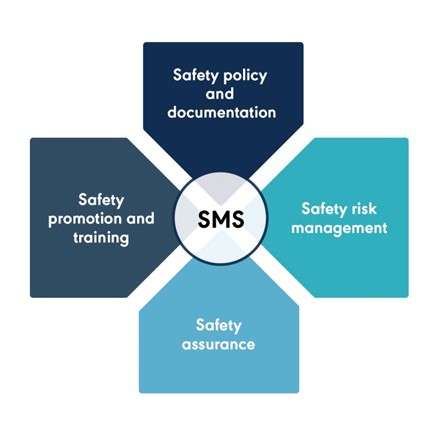
How do I build my SMS?
How do I build my SMS?
Leadership & Commitment
Senior management visibly owns safety. Policies exist and are actively communicated.
Risk Management
Hazards are identified, assessed, and controlled with documented processes. The Mobile crane code and the Master Code both talked about the risk management process.
People
Workers are trained, competent, and have clear safety responsibilities.
Assurance & Improvement
The system is reviewed, audited internally, and improved over time.
Safety Systems
Operational systems, including load restraint, vehicle maintenance, and fatigue management, are documented and followed.
The Safety Management System (SMS) should be appropriate to the scale and risk profile of the crane operation. Smaller operators are not expected to maintain the same level of documentation or formality as large fleet businesses. However, all operators must be able to demonstrate that effective systems and controls are in place, and that these are being actively implemented and maintained to manage safety risks.
What this means for CICA members: If you don’t yet have a documented SMS, you should begin developing one as soon as possible. If an SMS is already in place, it’s important to assess it against the required outcomes and identify any gaps.
There are a range of supporting materials available on the NHVR website, including fact sheets, guidance documents and practical templates to help operators develop and improve their Safety Management Systems. You can access these resources here
Key components of risk management are:
- Hazard identification
- Risk assessment
- Selection of control measures
- Implementation and training
- Systems to monitor and report on the effectiveness of controls
- A process for periodic review of the system and a process for responding to incidents, lead and lag indicators, and new risks
Depending on your business size and operations, your SMS can be built accordingly, assome hazards and risks will be present in some businesses, but not in others, according to their circumstances.
Using the Master Code, the Mobile Crane Industry Code of Practice, additional resources , businesses can:
- Review how jobs are planned and communicated.
- Make sure routes, permits, and risk assessments are up to date.
- Provide regular refresher training i.e. the Articulated Mobile Crane On-Road Course.
- Set up clear channels for staff to flag safety concerns without fear of blame.
A Shared Responsibility
Safety is a shared responsibility, so whether you’re selecting the equipment, scheduling the job, , or managing the site, your decisions all form part of the same chain.
COR and Mobile Crane Transport Activities Q&A
For a mobile crane, there are four relevant parties in the CoR:
Employer: The person or business that employs the driver of a mobile crane.
Prime Contractor: The person or business that engages the driver of a mobile crane under a contract for services.
Operator: The person or business responsible for directing or controlling the use of a mobile crane. Examples include a crane business that supplies cranes and crews, a person who owns and operates a mobile crane, or a business that hires a mobile crane from its owner.
Scheduler: A person or business that schedules a mobile crane.
For other types of heavy vehicle, there could be up to 10 CoR parties, refer to the Master Code to find out more. When a mobile crane is used to load or unload a heavy vehicle, there are more applicable parties, refer to section 11 of the Mobile Crane Industry Code of Practice.
Under the amended Heavy Vehicle National Law (HVNL), the expanded "Unfit to Drive" duty makes it illegal for anyone to operate a heavy vehicle (over 4.5 tonnes) if they are impaired by fatigue, illness, injury, drugs, alcohol, or mental health issues.
This brings heavy vehicle requirements into closer alignment with the Work Health and Safety Act 2011, making it clear that both drivers and operators share responsibility for actively managing health and fitness.
Your SMS should incorporate robust processes to assess and manage fitness for duty—not limited to fatigue alone. This includes practical measures such as defined procedures for reporting illness or medication use, and appropriate support mechanisms for workers dealing with health-related issues. These elements are now expected to be part of a verifiable and auditable safety system, rather than optional good practice.
Refer to Clause 3 on Page 7 of the Crane Industry Code of Practice, which outlines the process for identifying hazards, assessing risks, and implementing appropriate control measures.
Control measures should be selected based on the specific hazards and risks identified within your operations. CICA's CraneSafe, CrewSafe, StartSafe, and the Articulated Crane Training Course can all form part of an effective risk control strategy.
For example, Page 13 of the Crane Code identifies the hazard of collision caused by the manner of driving. Suitable control measures to address this risk may include:
Enrolling operators in the CrewSafe program to improve driving behaviours and safety awareness.
Requiring operators to complete the Articulated Crane Training Course to enhance their knowledge and competency when operating articulated cranes.
Verifying operator competency through CrewSafe assessments.
Incorporating risk assessments and pre-start processes through programs such as StartSafe.
These measures help reduce the likelihood of collisions by improving operator competence, awareness, and safe work practices.
Another example is Page 22 of the Crane Code identifies the risk of the mobile crane's mechanical condition causes a collision. A suitable control measure may be to inspect your crane under the CraneSafe program. CraneSafe provides independent third-party inspection of the crane's condition, helping to identify mechanical defects, maintenance issues, and non-conformances before they result in an incident. This can assist businesses in meeting the control measures outlined in the Crane Code, particularly those relating to programmed inspections, monitoring, and third-party verification of crane safety and roadworthiness.
Alternative Controls For Mobile Cranes
Lift plans for loading or unloading a heavy vehicle are typically developed by a competent crane operator or lift supervisor. Crane operators are trained in lift planning as part of the requirements for obtaining a High Risk Work Licence and are responsible for planning and conducting lifting operations within the crane's rated capacity and the manufacturer's instructions.
The involvement of the crane OEM or a professional engineer is generally only required where the lift is classified as a Designed Lift or an Engineered Lift, or where the proposed lifting method falls outside the scope of the crane manufacturer's instructions and recommendations. In these situations, additional engineering assessment may be required to ensure the lift can be carried out safely and in accordance with AS 2550.
Mobile cranes are not typically fitted with weighing systems and generally cannot weigh a load or provide an indicative weight for loading purposes. As a result, this control measure may not be applicable to many crane loading and unloading operations.
For crane-related loading activities, reference should instead be made to Section 11 of the Mobile Crane Industry Code of Practice, which contains controls specifically developed for loading and unloading heavy vehicles using cranes. These controls include obtaining information about vehicle mass limits, developing loading plans where appropriate, estimating or determining the mass of loads using available information, and ensuring crane operators are provided with the information necessary to load vehicles safely.
The Mobile Crane Industry Code recognises that the mass of a load may be determined through a range of methods, such as manufacturer information, load documentation, known material densities, weighbridges, on-board mass systems, or other suitable means, rather than by the crane itself. Therefore, where crane operations are involved, the Mobile Crane Industry Code provides more relevant and practical guidance than a requirement for the loading equipment to weigh the load.
This brings heavy vehicle requirements into closer alignment with the Work Health and Safety Act 2011, making it clear that both drivers and operators share responsibility for actively managing health and fitness.
Your SMS should incorporate robust processes to assess and manage fitness for duty—not limited to fatigue alone. This includes practical measures such as defined procedures for reporting illness or medication use, and appropriate support mechanisms for workers dealing with health-related issues. These elements are now expected to be part of a verifiable and auditable safety system, rather than optional good practice.
Learn More
Disclaimer: The information displayed on this page is intended as a general guide only. While every effort has been made to ensure accuracy, regulations and requirements may change over time. It is your responsibility to be aware of and comply with all relevant local, state, and federal laws applicable to your specific job or project. Always consult official regulatory bodies and seek professional advice when necessary to ensure compliance with the latest safety and legal requirements.
