




5 May 2025
CICA Calls for Urgent Action to Address Approval Delays Impacting Critical Infrastructure Projects
After two years of actively seeking a solution with the Department of Infrastructure, The Crane Industry Council of Australia (CICA) is calling on whoever the new Minister for Infrastructure, Transport, Regional Development and Local Government will be after the Federal election, to urgently push for the ADR Harmonisation Review to be completed this financial year. The current regulatory delays associated with ROVER jeopardise the timely delivery of cranes essential to Australia’s critical infrastructure projects, including the ‘Future Made in Australia’ transmission lines.
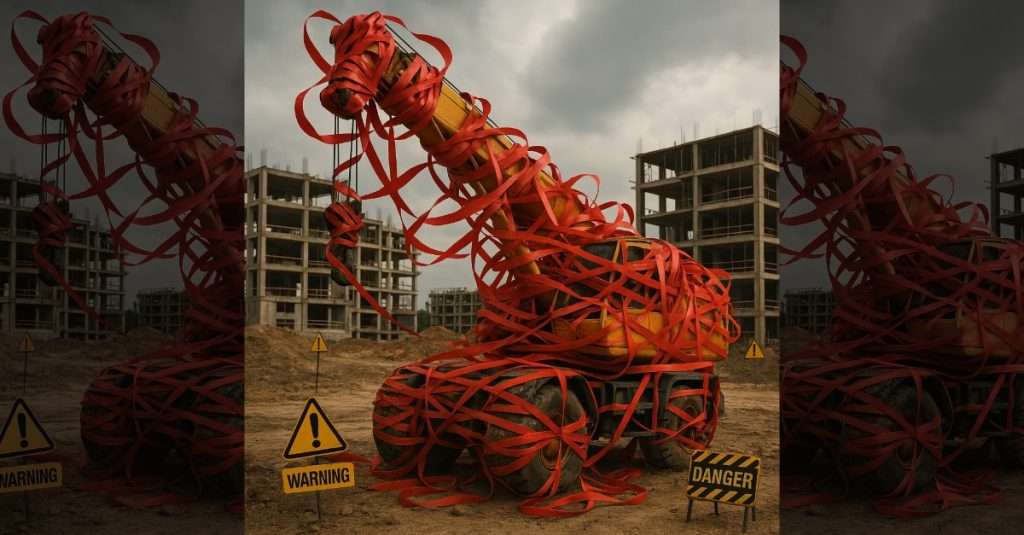
Australia’s housing, renewable energy, and infrastructure projects are at risk of being stalled, delayed, or blown over budget due to bureaucratic red tape hampering the importation of cranes vital to construction.
“Every week of delay costs crane companies thousands of dollars and drives up the cost of housing and major infrastructure projects,” said CICA CEO Brandon Hitch, “These delays are not just hurting crane operators—they’re flowing through to homebuyers, taxpayers, and industries relying on cranes to get the job done.”
He went on, “without urgent reform, projects will slow, costs will rise, and the economy will suffer ” said CICA CEO Brandon Hitch.
It was abundantly clear during February’s Senate Estimates hearings when then Shadow Minister for Infrastructure, Transport and Regional Development, Senator Bridget McKenzie asked questions on CICA’s behalf, of the Department of Infrastructure, Transport, Regional Development, Communications and the Arts – that the Department under Labor Minister Catherine King had no understanding or willingness to understand the impact ROVER is having on our sector.
“The answers provided to the Committee do not reflect our experience,” stated Mr Hitch.
The financial burden of these delays is staggering, as it takes 18 months from the time of order to delivery. From the moment a contract is signed for a crane, the costs accumulate at a minimum of $10 000 per week/per crane. Many of the businesses involved are small businesses and adding another 7 weeks to navigate the convoluted bureaucratic process is both significant and costly.
Currently, the approval process is fraught with inefficiencies. The ROVER system was introduced as part of the Road Vehicle Standards Act, a framework designed to replace the Motor Vehicle Standards Act and modernise vehicle importation, certification, and compliance across Australia. Cranes imported from overseas and cranes manufactured in Australia must comply with Australian Design Rules, ensuring vehicles comply with emissions, safety and anti-theft requirements.
“The industry doesn’t have an issue with these changes”, stated Brandon Hitch, “the problem is the process”.
ROVER is the department’s online portal for applications and approvals under the Road Vehicle Standards (RVS) legislation. The entire process is clunky and requires numerous unnecessary hoops.
CICA has outlined a very workable solution in meetings and correspondence with the Department of Transport and Infrastructure, supported by industry-wide feedback and case studies highlighting the severe impact of current approval delays.
At the heart of the issue is the need for mutual recognition of EU Regulation (EU) 2018/858, which aligns with Australian Design Rules (ADRs) while streamlining the importation process for new and second-hand cranes.
“This isn’t just about red tape; it’s about the survival of businesses and the broader economic impact,” said Brandon Hitch. “The Department’s stated average approval timeframe of 17 – 42 days is not representative of what is really happening, as it doesn’t account for the significant time and effort required to gather the necessary paperwork and then the NHVR (National Heavy Vehicle Regulator) consultation to obtain an ‘In Principle Support’ letter. This process can drag out for months, creating bottlenecks that the industry simply cannot afford.”
“The EU standard is globally recognised as the gold standard for safety and efficiency,” he added “The entire industry is asking a straightforward question: why can’t this solution be implemented now? We need whoever forms Government on 3 May 2025 to act with urgency and prioritise the mutual recognition of these standards.”


